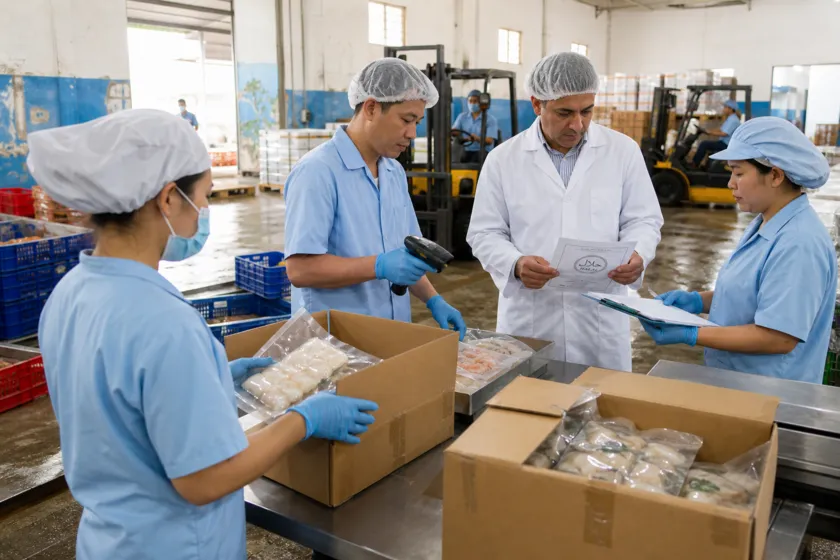
Vietnam is positioned to take a bigger role in Halal trade because it already operates at export scale. Vietnam’s global exports hit nearly $520 billion in 2024, making it one of Asia’s top exporting nations. At the same time, businesses are drawn to ASEAN as a major demand base, described as the world’s fourth-largest market with 700 million people and a GDP of more than $4 trillion. This matters for a Vietnam Halal export market strategy because Halal buyers often require strict process control, predictable supply, and reliable market access. Vietnam’s investor-friendly policies and political stability are also cited as factors that support predictability for international partners.
A strong Halal strategy starts with rules, verification, and steady communication. A practical model comes from how export industries work with authorities and certifiers to meet destination-specific Halal needs. One example describes close cooperation among an exporter group, a national agriculture department, Halal authorities in foreign countries, certification agencies, and processors. The lesson for Vietnam is simple. Halal standards change and vary by market. Exporters protect access by building partnerships, using scientific research, and maintaining open communication between government and industry groups. That approach also supports trust, which is critical for long-term Halal demand.
Build Value-Added Halal Supply Chains, Not Just Volume
Vietnam can raise export value by shifting from raw products to deeper processing and branded goods. Vietnam aims to achieve about 74 billion USD in agro-forestry-fishery export turnover this year, and the strategy highlights expanding value-added products, improving quality standards, and strengthening brand building through international supermarket systems. Regional partners are also moving in this direction. Malaysia is looking to expand agricultural exports to Vietnam with value-added products such as processed poultry, pasteurised liquid eggs, duck-based products, and edible bird’s nest. For Halal positioning, these categories signal where processing standards, traceability, and certification can create premium positioning rather than competing only on price.
Distribution is the second engine of growth for a Vietnam Halal export market plan. Government-led trade promotion programmes have focused on connecting Vietnamese businesses with international distribution networks so goods can enter global retail systems rather than relying on intermediaries. Exporters also point to cross-border e-commerce as a direct route to consumers. One cited example is working with specialised platforms to broaden modern channels and boost the presence of Vietnamese products in competitive markets like North America and Europe. This matters for Halal because clear product information and certification visibility can travel with the listing, and brands can build reputation faster when feedback loops are direct.
Finally, Vietnam should treat trade fairs and regional partnerships as demand intelligence tools. Biofach 2026 attracted around 35,000 trade visitors and more than 2,200 exhibitors from nearly 90 countries, showing how concentrated buyer access can be in one venue. Vietnam also benefits from bilateral trade dialogues that open corridors for sectors including food processing, seafood, meat, fruits, and pharmaceuticals, with one trade group urging a $5 billion bilateral trade target over the next few years by diversifying exports and improving market intelligence sharing. When Vietnam aligns certification, value-added processing, and modern distribution, it becomes easier to convert such conversations into repeat Halal orders.
Why is Vietnam well-placed to grow Halal exports?
What capabilities matter most for a Vietnam Halal export market strategy?
How can Vietnam increase value in agriculture exports while targeting Halal demand?
Which channels can help Vietnamese exporters reach buyers faster?
How can trade events support Halal export growth?