Vietnam’s green financing story is being written in real time, driven by a clear mismatch between climate goals and available capital. BloombergNEF estimates Vietnam’s net-zero pathway requires USD 2.4 trillion by 2050, while the power sector alone needs USD 142 billion by 2030. Vietnam’s government also estimates a near-term green transformation financing requirement of USD 28 billion for 2025–2030, described as approximately 6.8% of GDP every year. Against that scale, the Just Energy Transition Partnership (JETP) commitment of USD 15.5 billion is meaningful but only a fraction of the broader need. These figures help explain why the country is broadening the toolkit beyond traditional policy-led credit, toward bond markets and international capital structures.
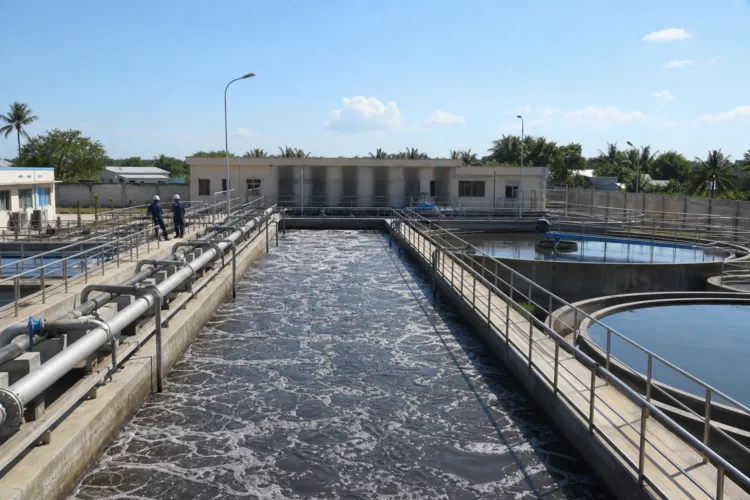
Green bonds are one of the clearest signals of that shift. Statistics cited for Vietnam show total green bond issuance exceeded USD 1.5 billion from 2020 to 2025, with proceeds prioritized for areas such as renewable energy and clean water management. Another market snapshot shows issuances rose from USD 284 million in 2016–2020 to approximately USD 1.4 billion by June 2024, underlining the pace of market formation rather than market maturity. Vietnam’s carbon neutrality commitment by 2050 is often referenced as a driver, but issuers still face practical hurdles, including project preparation and reporting costs. That gap between ambition and execution is central to how the green bond channel will develop.
Policy Architecture and Market Integrity Are Catching Up
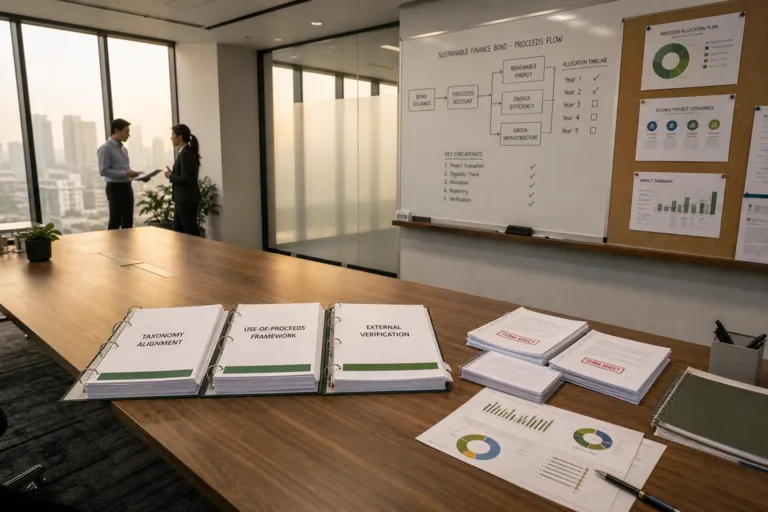
Legal clarity is improving, which matters for both domestic issuance and foreign participation. Vietnam’s first legally binding green taxonomy was issued through Decision 21/2025/QĐ-TTg, effective July 2025, classifying 45 project types across seven development categories as eligible for green loan and financing support. However, implementation capacity remains a constraint; even with the July 2025 Green Classification List, preparing projects to meet technical criteria in a short timeframe is difficult, which can limit the supply of “issuance-ready” assets. On the integrity side, international standard-setters are shaping expectations. Climate Bonds screens self-labelled green bonds using a science-based methodology and provides a Standard aimed at market integrity, environmental impact, and minimum safeguards.
Credit markets show how fast demand for green capital is building, and why bonds could become an important complement. The State Bank of Vietnam set targets for green credit to reach 10% of total loans by 2025 and 25% by 2030. Total green credit outstanding reached VND 828 trillion (approximately USD 33 billion) by mid-2026, growing at over 20% annually since 2017. A separate Vietnam-focused source also cites total green credit outstanding of approximately USD 30 billion by the end of 2025, reflecting rapid expansion in a still-evolving reporting landscape. For green bonds to scale alongside this credit surge, issuers need stronger pipelines, clearer data, and credible reporting practices that match investor expectations.
International trends reinforce why Vietnam is working to make its market “connectable” to global capital. By the end of 2025, cumulative issued bonds and GSS+ (Green/Social/Sustainability and related variants) loans exceeded USD 10 trillion globally, and by 2025 about 96% of issuers referenced the ICMA Principles while 83% of labeled issuances met Climate Bonds Initiative criteria. Within Vietnam, landmark steps include EVN Finance becoming the first issuer in Vietnam to structure a green bond under the ICMA Green Bond Principles in 2022, and VPBank issuing its first green bond to the international market in 2025 (USD 300 million). For the Vietnam green bond sustainable finance agenda, the next phase is less about proving the concept and more about scaling credible issuance, building MRV capacity, and expanding eligible projects, including transition pathways for higher-emission industries.
How big is Vietnam’s climate investment gap according to available estimates?
How much has Vietnam issued in green bonds in recent years?
What policy change helped define what qualifies as “green” for financing in Vietnam?
What is holding back wider corporate participation in green bond issuance?
What does the Vietnam green bond sustainable finance topic mean for international investors?