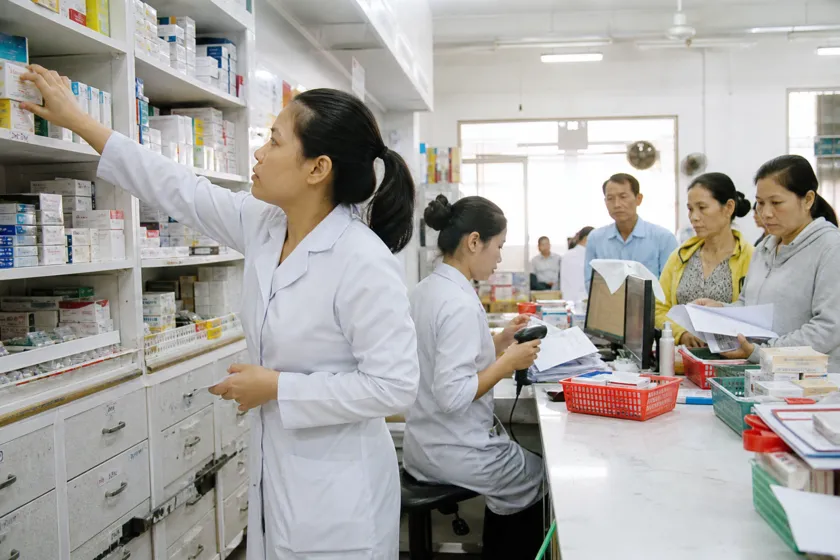
The Vietnam generic drugs market is being discussed as a major healthcare opportunity heading toward 2034, with an $8.6 billion headline outlook framing the scale of potential. The broader context matters. Generic medicines are widely positioned as lower-cost alternatives that can help patients stay on treatment. One cited benchmark is that generics often cost 80% to 85% less than branded drugs, a level of savings that can support adherence for chronic conditions such as diabetes, high blood pressure, and cardiovascular issues. This affordability narrative is a key reason investors and healthcare stakeholders watch how fast market access improves and how efficiently supply can scale.
Global indicators also reinforce why Vietnam is in focus. A Precedence Research outlook described a global generic drugs market rising from USD 491.67 billion in 2026 to nearly USD 762.48 billion by 2035, at a CAGR of 5% during 2026–2035. In that same view, North America was the largest market, while Asia-Pacific was identified as the fastest growing region. That regional signal is relevant for Vietnam because it aligns with the idea that growth is increasingly driven by expanding access and demand for low-cost alternatives, alongside patent expirations and rising chronic diseases.
What Policy and Channel Signals Suggest About Market Access
Trade and regulatory steps are another practical driver of opportunity. Reuters reported that Britain said it would strike an agreement with Vietnam to make it easier for pharmaceutical firms to sell UK-made medicines in Vietnam. Vietnam will hasten the registration of new medicines and vaccines, and it will recognize approvals from more regulators, including Britain’s Medicines and Healthcare products Regulatory Agency. The UK government said the deal could be worth 250 million pounds ($337 million) to the British pharmaceutical sector over the next five years. For Vietnam, faster registration and broader recognition of approvals can translate into quicker product entry and more competition, which typically supports generic adoption.
Distribution dynamics seen in broader generic-drug research can help frame what may matter operationally. In the same global market outlook, retail pharmacy accounted for the largest market share in 2025, while hospital pharmacy was projected to grow at a solid CAGR between 2026 and 2035. Therapeutic mix signals were also highlighted: the cardiovascular segment generated the biggest share in 2025, and oncology was expected to expand at the fastest CAGR between 2026 and 2035. These patterns are not Vietnam-specific, but they suggest where demand, formulary decisions, and channel execution often concentrate when markets scale.
U.S. market figures further underline the durability of the generic model, offering a reference point for how large, regulated markets evolve. Nova One Advisor projected the U.S. generic drugs market to increase from USD 138.24 billion in 2024 to around USD 196.90 billion by 2034, with a CAGR of 3.6% from 2025 to 2034, and a 2025 size of USD 143.22 billion. The same source emphasized that pure generics can be an effective, FDA-approved choice matched to brand-name equivalents across strength, dosage, safety, form, quality, intended use, and performance characteristics. As Vietnam’s outlook to 2034 is debated, these reference signals help stakeholders evaluate access, pricing pressure, and the importance of trusted quality frameworks.
Why are generic medicines positioned as a major affordability lever in Vietnam’s outlook?
What does the global generic-drug forecast suggest about Asia-Pacific momentum?
How could the UK-Vietnam deal affect medicine access and competition?
What channel trends are highlighted in generic-drug market research?
How large is the Vietnam generic drugs market opportunity being discussed for 2034?