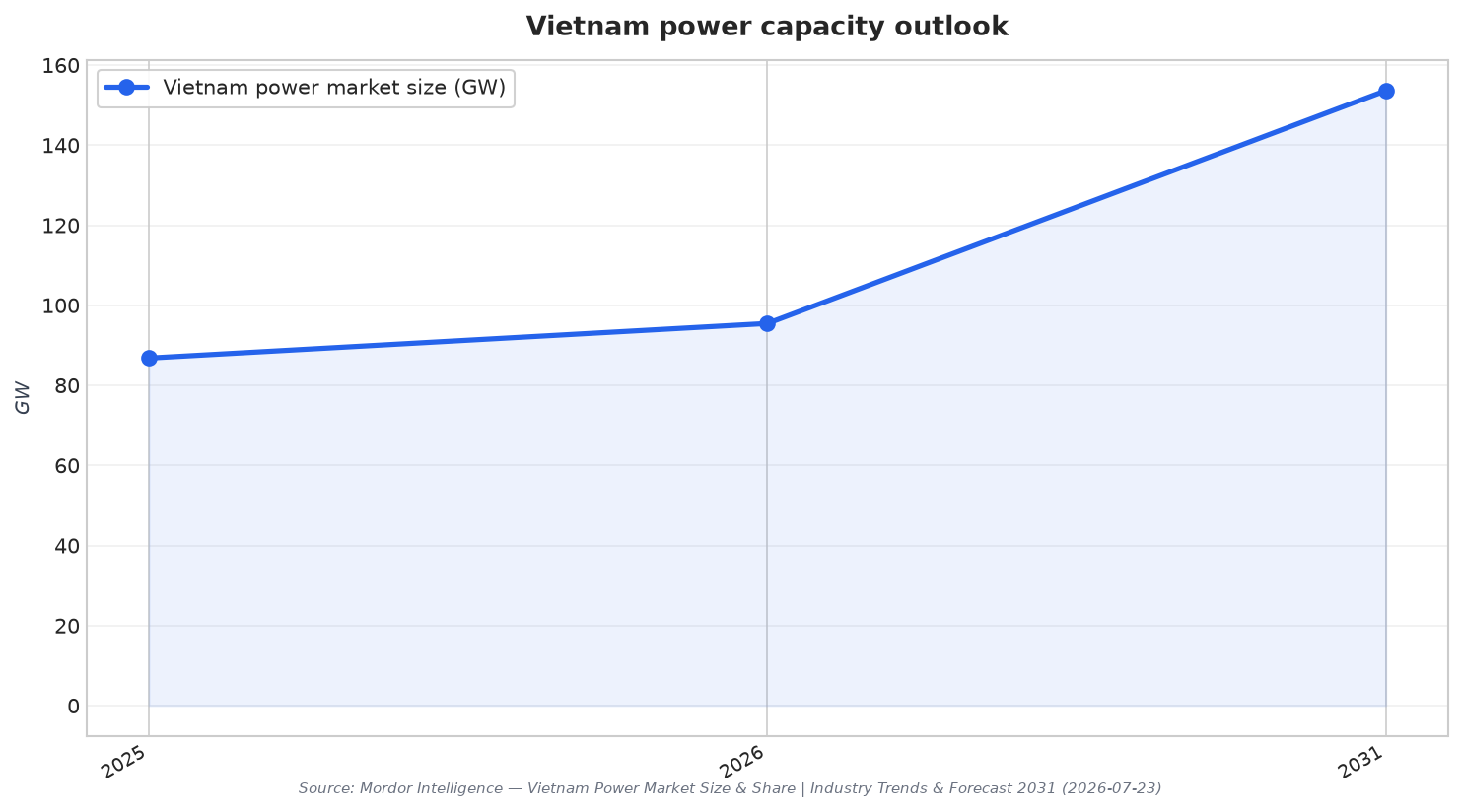
Vietnam’s LNG-to-power pipeline is being framed as a bridge between coal and renewables, but the decisive issue is financial close. Power Development Plan 8 (PDP8) is shaping the project map and the qualification rules that sit behind bankability. In Vietnam’s wider power market outlook, installed capacity is expected to rise from 86.81 GW in 2025 to 95.46 GW in 2026, and to 153.62 GW by 2031, with a 9.98% CAGR over 2026–2031. That expansion creates room for new thermal capacity, but it also forces project sponsors to prove contracts can withstand dispatch, fuel, and pricing uncertainty.
One reason the financing conversation is so intense is that Vietnam’s LNG ambitions are explicit in planning documents cited by analysts. In Southeast Asia thermal power analysis, Vietnam is described as an emerging growth center under adjusted PDP VIII, which targets 22,524 MW of LNG-fired capacity by 2030. Dialogue Earth similarly reports a plan that placed 9.5–12.3% of targeted 2030 electricity capacity on LNG, with projects totalling 22.5 GW. At the same time, renewables are already a large part of the market: renewables held 56.85% share in 2025 and are projected to advance at 11.46% CAGR through 2031. That mix shift influences how lenders assess future LNG run-hours.
What Makes LNG-to-Power Bankable in Vietnam Right Now
Bankability has become a practical bottleneck. The Business Times reports that, without deeper reforms, many projects remain stuck in negotiations over power purchase agreements, gas supply contracts, and financing, even as Nhon Trach 3 and 4 are among the few progressing on schedule. It also notes that one Vietnam LNG-fired power plant project, after groundbreaking in 2022, secured nearly US$1 billion in financing without government guarantees, a milestone closely watched by investors. Yet the same report highlights investor concern that a 65% offtake guarantee is below the break-even point for LNG projects, given high fuel costs and complex financing structures.
Pricing and dispatch rules add another layer. Dialogue Earth reports Vietnam capped the price for LNG-fired power at VND 3,327 (USD 0.13) per kWh, and that this is significantly higher than solar price ceilings ranging from USD 0.03 to 0.07. It also reports EVN currently prioritises buying the cheapest unit of power available, meaning solar, coal, and hydro are usually favoured, which raises utilisation risk for LNG investors. Meanwhile, EPC realities matter because schedules affect revenue start dates. MarkWide Research describes typical commercial operation timelines ranging from 24 to 60 months, and notes that mega projects above 1,000 MW concentrate foreign contractor participation while EVN technical codes govern interconnection and compliance.
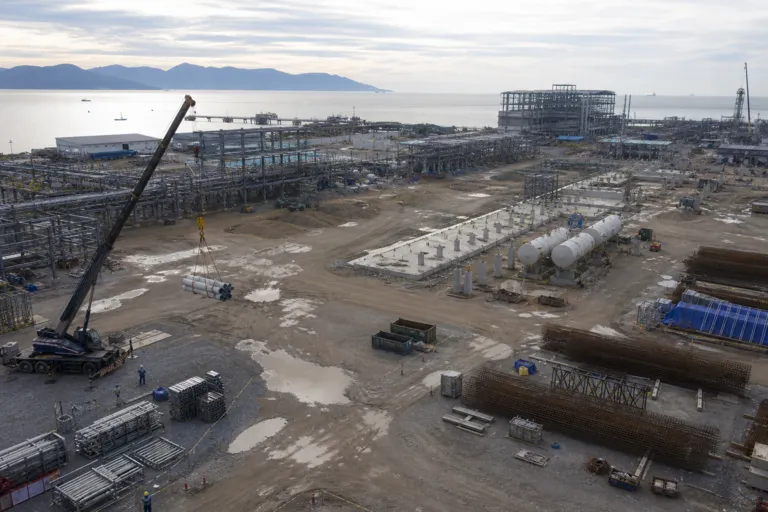
Despite the friction, execution signals are visible in project milestones and corporate positioning. GG POWER reports that the Hai Phong LNG Power Plant broke ground on September 26, 2025, with investment exceeding VND 178 trillion and a capacity of 4,800 MW, describing it as one of the largest IPP projects in Vietnam’s history. The same source says completed in October and December 2025, 1,624 MW of LNG plants with a USD 1.4 billion investment represent Vietnam’s first LNG-imported gas power projects. In parallel, the market narrative points to increasing private participation: MarkWide Research says independent power producers are reorganizing EPC demand, while Mordor Intelligence notes an evolving landscape dominated by state-owned EVN as international developers anchor LNG projects.
What capacity target does PDP8 set for LNG-fired power in Vietnam by 2030?
Why do some Vietnam LNG-to-power deals struggle to reach financial close?
What is the regulated price cap for LNG-fired electricity in Vietnam?
Which major LNG project milestone shows momentum for Vietnam LNG to power projects?