
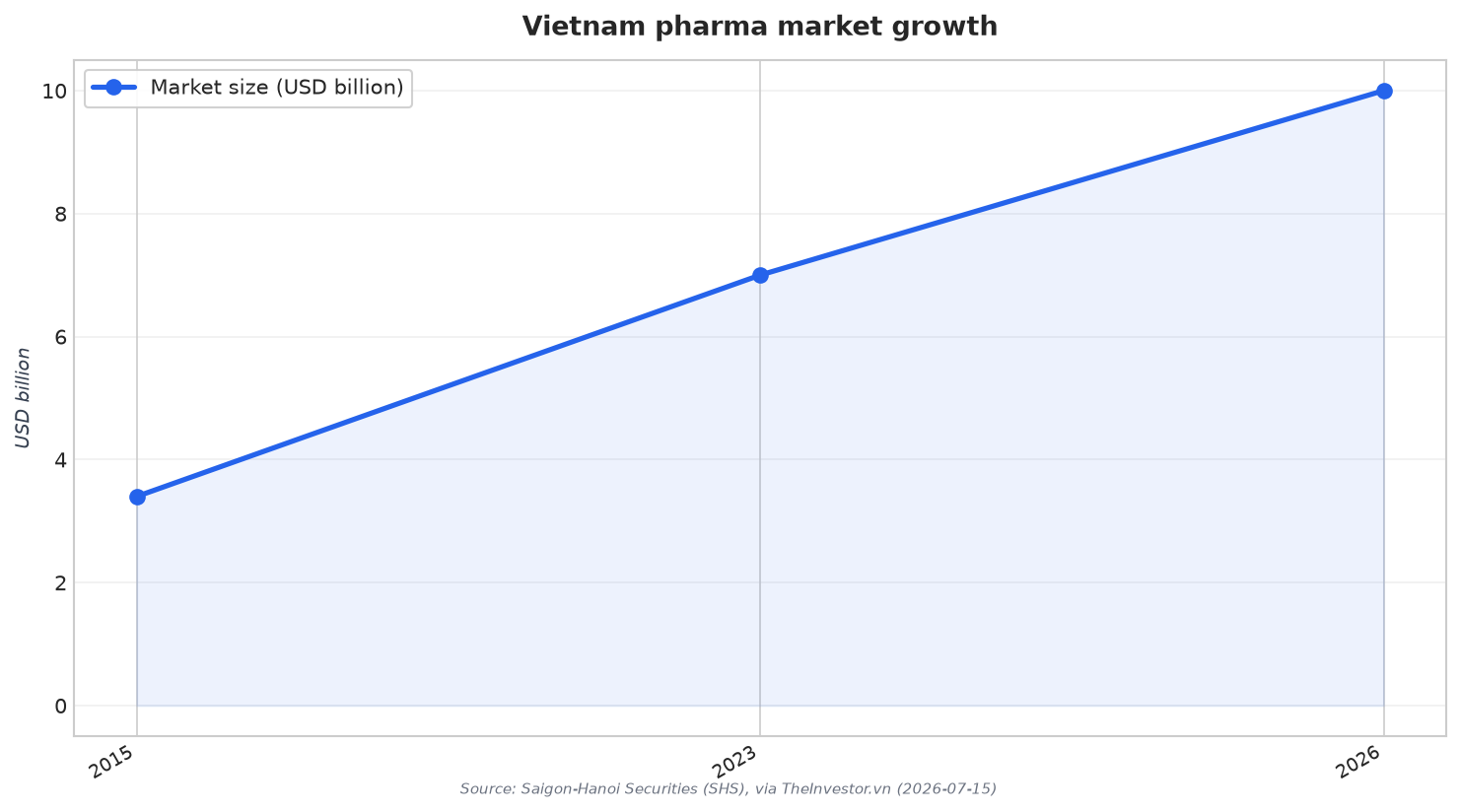
Livzon Pharmaceutical Group’s takeover of Imexpharm has become a defining moment for Vietnam pharma M&A, not only because of the buyer profile but because of what the asset represents. Vietnam’s pharmaceutical market expanded from $3.4 billion in 2015 to around $7 billion in 2023, and Saigon-Hanoi Securities (SHS) expects it to top $10 billion in 2026. Industry estimates cited in the same report suggest a range of $13 billion to $15 billion by the end of the decade. This growth narrative, paired with shifting regulation, is drawing renewed investor attention to manufacturing scale, quality standards, and hospital-channel access.
The Livzon–Imexpharm transaction closed through Lian SGP Holding Pte. Ltd., a Livzon-linked entity, buying 104,545,781 shares via a voluntary public tender offer that ended on April 29, 2026. That stake equals 67.87% (reported as 67.88% in another disclosure) of Imexpharm’s charter capital, giving Livzon decisive control. The offer price was VND57,400 per share, and the deal value was described as approximately VND6 trillion (roughly $236 million), while Chambers and Partners cited deal value of around USD221 million for Livzon’s Imexpharm acquisition. After completion, Imexpharm’s major shareholders included Lian SGP at 67.87% and Vietnam Pharmaceutical Corporation (Vinapharm) at 22.04%.
Why This Deal Fits Vietnam’s Next M&A Playbook
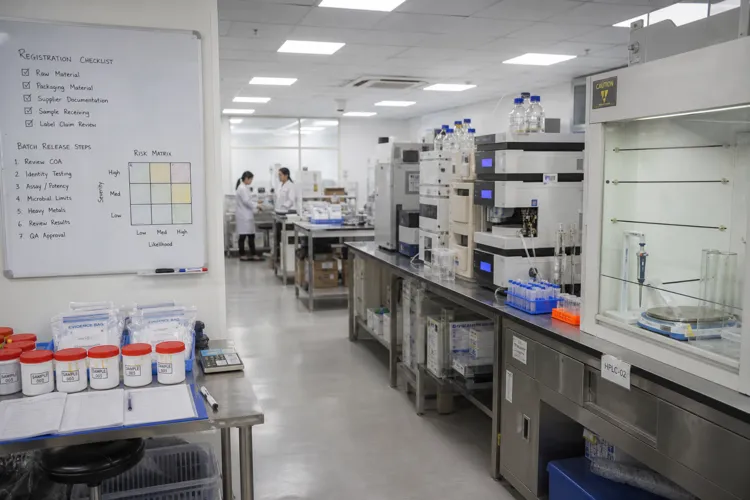
Strategic fit matters because Vietnam’s demand is concentrated where technical standards and tender access count. The ethical drugs (ETC) segment, or hospital channel, accounts for roughly 70% to 76% of total consumption and is expanding at around 12% annually, compared with 8% growth in the OTC retail pharmacy market. Vietnam’s universal healthcare program covers approximately 95.2% of the population, supporting rising usage inside formal care settings. Imexpharm’s positioning matches that reality: it is known for antibiotics and, according to reporting on Livzon’s long-term strategy, is among the few domestic companies with multiple EU-GMP certified production lines, especially in antibiotics where cross-contamination risk demands strict quality control.
Regulation is also re-weighting which assets are “buyable” and how value gets created after closing. Vietnam enacted an amended Law on Pharmacy effective July 1, 2025, aiming to streamline drug registration and provide incentives for domestic manufacturers producing advanced generics and biosimilars. Procurement rules are pushing the same direction: Circular 03/2024 grants preferential access to Group 1 and Group 2 for medicines made in facilities certified under EU-GMP or Japan-GMP standards. Chambers and Partners also notes greater participation by foreign-invested enterprises, including the ability to directly distribute drugs and pharmaceutical ingredients that they manufacture, outsource for processing, or receive via technology transfer in Vietnam to healthcare facilities.
Looking beyond a single transaction, multiple forces are converging toward a new cycle of deal-making. A SHS-cited forecast puts per capita spending on medicines rising from around $65 in 2025 to more than $90 by 2030. Meanwhile, the global “patent cliff” through 2030 covers drugs with combined annual sales of around $207 billion expected to lose patent protection, which may expand opportunities for Vietnamese companies to produce higher-tech generics and biosimilars that can replace more expensive imported drugs. In that context, the Livzon–Imexpharm acquisition offers a blueprint: control, hospital exposure, and international-standard production capacity aligned with evolving rules.
What happened in the Livzon–Imexpharm acquisition?
Why does the hospital channel matter for pharma deal targets in Vietnam?
Which regulations are shaping buyer interest and post-deal strategy?
What does the keyword topic—Vietnam pharma M&A—look like after Livzon–Imexpharm?
What market signals suggest sustained deal momentum in Vietnam’s pharmaceuticals?