
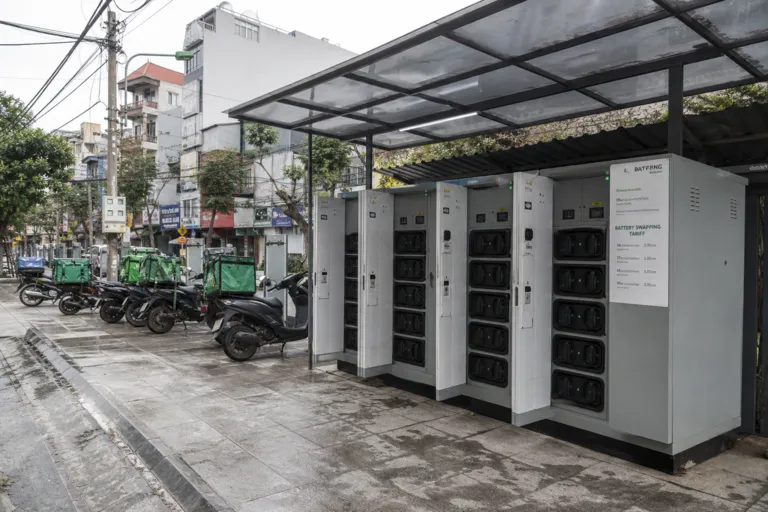
Vietnam’s electric mobility story is increasingly about operations, not just vehicle launches. As Vietnam’s EV charging infrastructure market matures, the key question becomes whether reliable energy access can match dense urban travel patterns and high daily mileage in commercial use. That is where battery swapping competes on one simple metric: downtime. In Vietnam, Selex Motors has linked with Grab and Lazada to roll out “battery ATMs” that deliver a 150 km range after a 2-minute exchange, according to a South East Asia market analysis by Mordor Intelligence. The same report frames swap technology as proven at sub-5-minute exchange times, aligning with fleet uptime targets where every minute affects asset productivity.
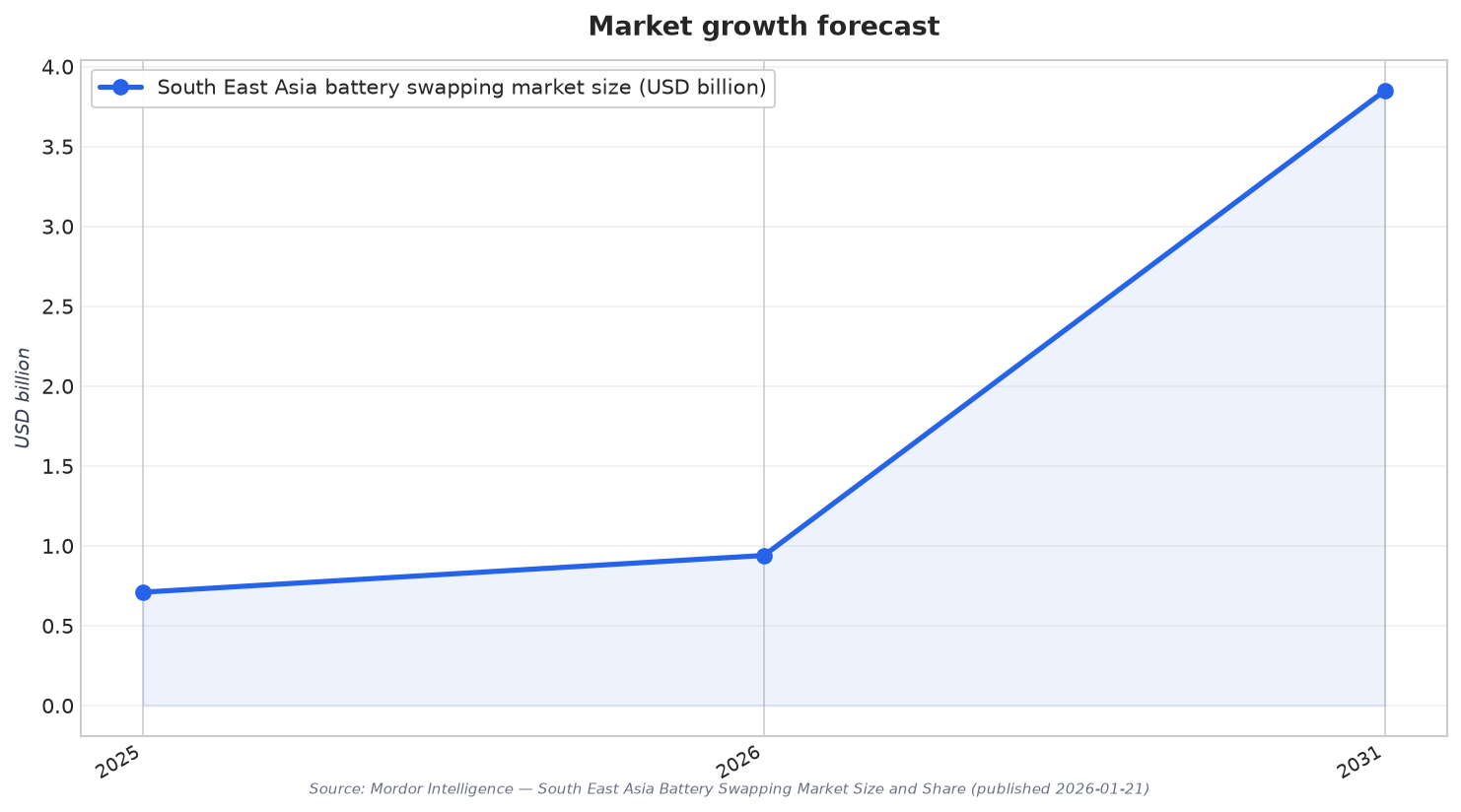
Regional market signals also explain why networks are being built for two-wheelers first. Mordor Intelligence estimates the South East Asia battery swapping market will grow from USD 0.71 billion in 2025 to USD 0.94 billion in 2026, and forecasts USD 3.85 billion by 2031 at a 32.52% CAGR over 2026–2031. Two-wheelers led with 70.62% of the region’s market share in 2025, and last-mile delivery represented 37.63% share in 2025. Those figures are South East Asia-wide, not Vietnam-only, but they fit Vietnam’s reality where two-wheelers are described as “the backbone of daily mobility” and where fleets and urban delivery demand are highlighted as a driver for infrastructure planning.
What Network Design Means for Real Fleet Uptime
In Vietnam, scale is no longer hypothetical. One industry comparison notes VinFast’s rollout of 4,500 battery-swap stations in early 2026, operated by its energy subsidiary V-Green. It describes a brand-integrated Battery-as-a-Service model with battery rental priced at around VND 200,000 (about USD 8) per battery per month, and each swap costing roughly VND 9,000 (about USD 0.35). For operators running compatible VinFast scooters, that closed ecosystem can simplify operations because the scooter, battery, swap station, and rider software are developed within a single program. But the same source warns that fleets using cargo models or non-VinFast configurations should not assume technical access or compatibility without written confirmation.
Interoperability is where the hard work sits, and it is not solved by physical fit. The interoperability overview explains that cross-brand swapping requires validation across mechanical interface, electrical architecture, digital communication via Battery Management System handshake, and vehicle integration so the Motor Control Unit authorizes normal operation after a swap. This matters because Vietnam’s two-wheeler electrification is expanding: one Vietnam market analysis reports electric two-wheelers’ market share increased from 5.14% in 2019 to 8.54% in 2020 and 10% in 2021. As adoption widens across formats, the market pressure rises for engineered compatibility approaches rather than assuming “plug-and-play for all.”
Fleet economics add urgency, especially in delivery. Ken Research values the Vietnam EV two-wheeler fleets market at USD 248 million in 2024 and projects it to reach USD 744 million by 2030, growing at a CAGR of 20.10% during 2024–2030. The same report says Vietnam’s e-commerce market exceeded USD 25 Bn in 2024 and represented about 9% of total retail goods and consumer service revenue, reinforcing persistent delivery demand and the need for charging support services. It also calls battery swapping a key acceleration pocket for last-mile and ride-hailing fleets, where minutes of downtime translate into lower driver income and lower asset productivity. In that context, vietnam battery swapping becomes less a consumer convenience feature and more a system for monetizing higher daily utilization.
How fast can battery swapping be for two-wheelers in Vietnam’s fleet use cases?
How large is VinFast’s battery swap network and what does it cost to use?
Why isn’t cross-brand swapping as simple as using a battery that fits?
What demand signals support delivery-focused swapping networks in Vietnam?
How fast is the Vietnam EV two-wheeler fleets market expected to grow?