Vietnam’s North–South high-speed rail is being positioned as a flagship infrastructure effort tied to industrialisation, modernisation, and regional connectivity. In the same policy push, the Government has approved nine new railway routes and upgrades to seven existing lines. It has also mapped out 28 urban railways in Hanoi and Ho Chi Minh City, covering over 1,100km in total by 2045. Officials warn that without decisive investment in people, Vietnam could stay dependent on foreign expertise to design, build, and operate these new transport systems. That warning has shaped how the project is being discussed: not only as a construction plan, but as a national capability-building project.
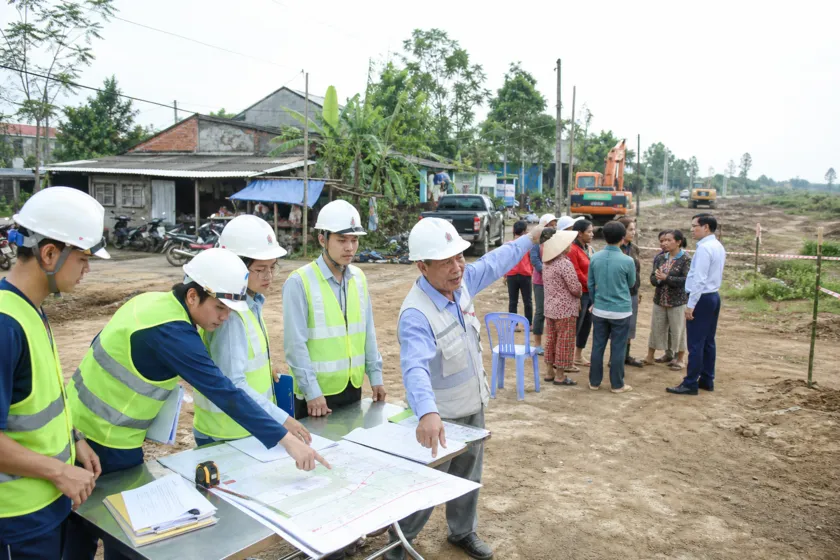
A key near-term step is land. Prime Minister Pham Minh Chinh has requested localities to start land clearance en masse for the gigantic North–South high-speed railway project on December 19. That directive signals a move from headline approval toward on-the-ground readiness, where coordination across provinces becomes the real test. It also reflects a practical sequencing logic. Land work can begin while technical preparations and institutional capacity-building continue. In parallel, some private groups are signaling interest in infrastructure participation, including registering investments linked to the North–South high-speed railway project.
Workforce and Technology: The Make-or-Break Layer
Vietnam is also planning the talent pipeline needed to run a modern railway system. The Ministry of Construction has drafted a project to train and develop railway personnel through 2030, with a longer vision to 2045. About 12,000 people will be trained specifically for railway operations and maintenance, including 4,500 for national railways and 7,500 for urban lines. From 2031 to 2045, a further 105,000 workers will be trained, with greater emphasis on research, technology transfer, and homegrown innovation. The goal is a core of 5,000 personnel engaged directly in research and technology mastery, gradually reducing reliance on foreign expertise.
Rolling stock and industrial capacity planning adds another layer of scale. Vietnam’s Railway Network Plan to 2050 targets 25 lines totalling over 6,300km, including 18 new routes. For equipment needs, the North–South high-speed railway is expected to require around 1,100 electric multiple unit (EMU) carriages, while urban rail projects require nearly 1,500 carriages. There is also demand for hundreds of locomotives, thousands of passenger coaches, and over 7,000 freight wagons on electrified and upgraded lines. Domestic manufacturing is described as limited, which is why the roadmap leans heavily on staged imports, assembly, and technology transfer.
The manufacturing timeline is structured in phases. From 2029 to 2031, Vietnam will import some locomotives and 160kph passenger trains, while starting assembly of electric and clean-energy locomotives and producing passenger coaches capable of 160kph speeds. Between 2032 and 2035, Vietnam aims to master production of passenger and freight coaches under 160kmph and raise localisation to 30 per cent. For the North–South high-speed railway, after 2032 Vietnam will start assembling high-speed EMU trains under technology transfer agreements, targeting 20 per cent localisation by 2035, 50 per cent between 2035 and 2040, and 80 per cent from 2040 to 2050 with fully domestic parts and materials.
What is the planned land clearance milestone for Vietnam’s North–South high-speed railway?
How many railway workers does Vietnam plan to train for operations and maintenance by 2030?
How many EMU carriages are expected for the North–South high-speed railway and for urban rail projects?
When does Vietnam plan to start assembling high-speed EMU trains for the North–South line under technology transfer?
What localisation targets are set for the Vietnam North–South high-speed rail rolling stock roadmap?