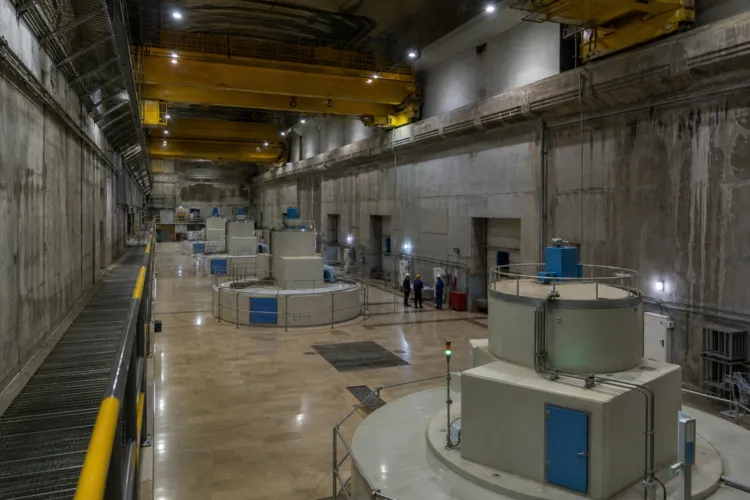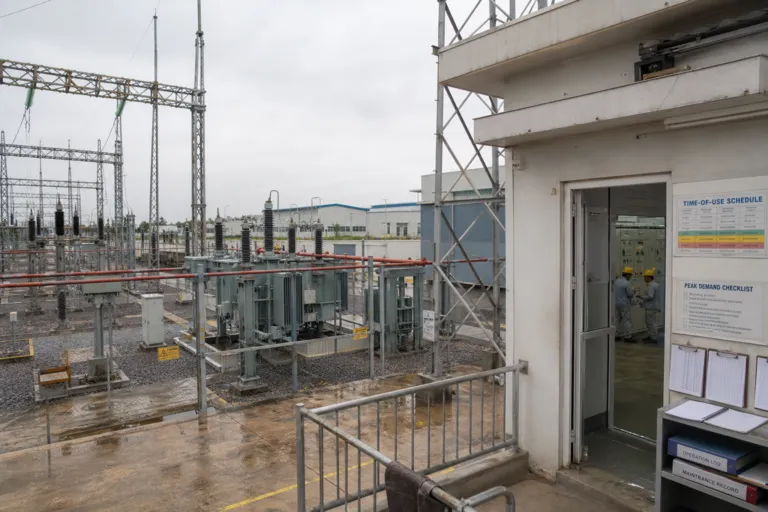
Vietnam is moving toward electricity pricing that better reflects how the power system is built and stressed. In October 2025, the Ministry of Industry and Trade approved a pilot that would split retail electricity prices into two parts: a fixed capacity charge and a variable energy charge. Today, customers are charged based only on how much electricity they consume. During the pilot, the two-part approach applies only to large industrial customers with average consumption of 200 MWh per month, and it is paper-based, using real-world data without changing what those customers actually pay during the trial.
For industrial sites, the key new idea is that maximum demand becomes a billable input, not just total usage. The proposed capacity charge is calculated from a customer’s peak demand in kW in a given month, defined as the highest 30-minute interval of demand during that month. The energy charge is still based on total kWh consumed. This aligns with the underlying cost structure described in the pilot materials: infrastructure is largely fixed and linked to peaks, while generating power and operating systems are more variable and linked to overall consumption. That structure turns load-shaping into a cost lever.
Peak Hours Get Redrawn, and Timing Starts to Matter More
At the same time, Vietnam has already revised time-of-use pricing for production and business customers. Under Decision No. 963/QD-BCT issued on April 22, 2026, peak pricing is compressed into a single evening block from 5:30 PM to 10:30 PM. The load shift behind that decision is described using official nationwide demand data published by NSMO: the daily peak has moved away from midday and now typically sits between 3:00 PM and 10:00 PM. Solar output drops after sunset, while wind is weather-dependent and small hydropower produces less in the dry season, increasing reliance on dispatchable sources during the evening spike.
This combination of peak-hour signals and capacity-based charging frames what the Vietnam electricity tariff reform can mean for industrial power costs: operations and procurement get tied more tightly to when energy is used and how high demand spikes. It also intersects with wider market changes. Vietnam formalized its DPPA regime under Decree 57/2025/ND-CP on March 3, 2025, with further direction in Resolution 253/2025/QH15 on December 11, 2025, expanding participation to retailers operating in industrial parks, economic zones, export processing zones, industrial clusters, and high-tech zones. But participation thresholds still shape access; the private-line model generally requires average consumption of at least 200,000 kWh per month.
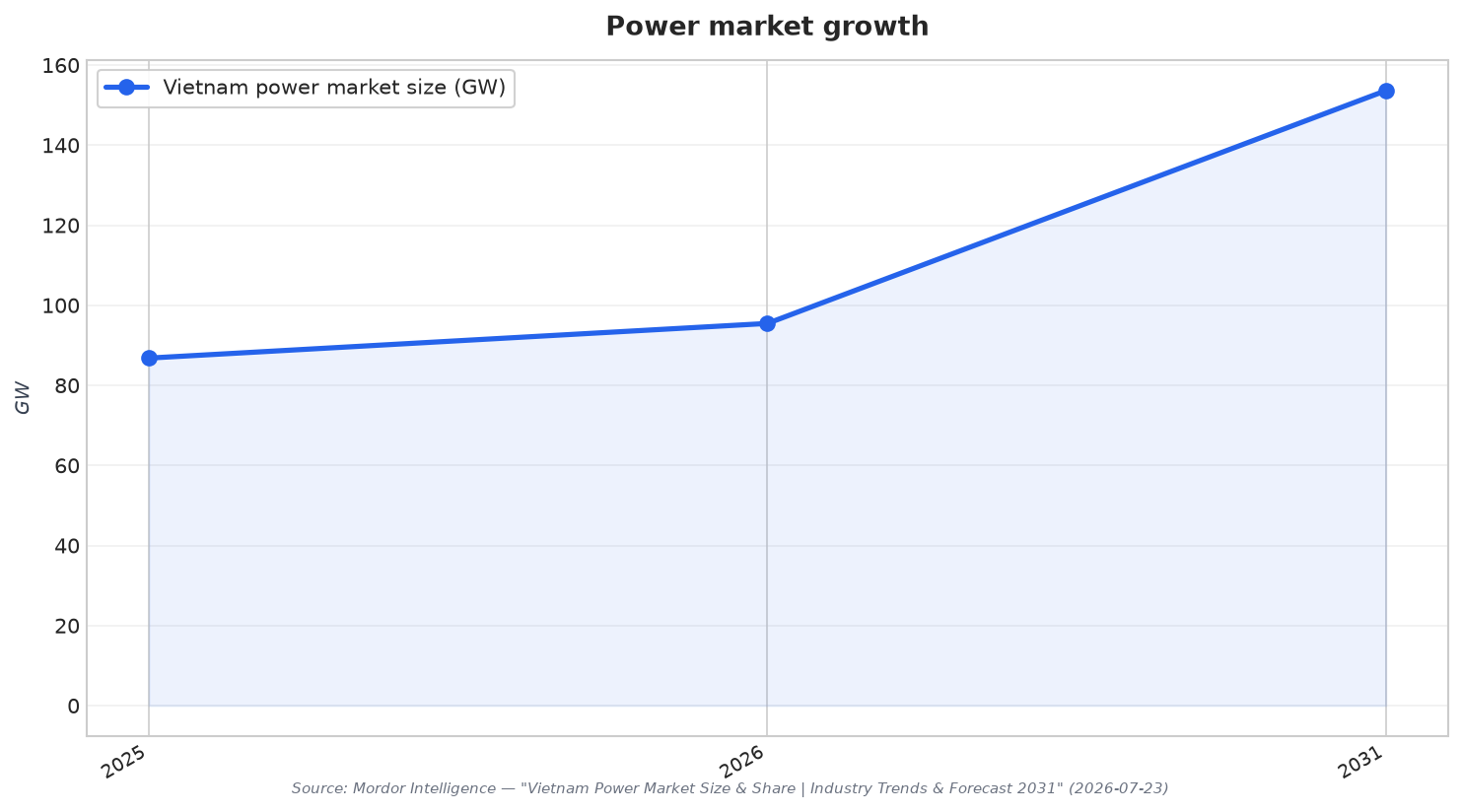
Industrial pricing reform is also unfolding alongside rapid power-sector buildout and shifting demand. Mordor Intelligence estimates Vietnam’s power market size growing from 86.81 GW in 2025 to 95.46 GW in 2026, reaching 153.62 GW by 2031, with a 9.98% CAGR over 2026–2031. In the same report, commercial and industrial consumers account for 51.35% of the market size in 2025 and are tracking an 11.08% CAGR through 2031. It also cites 2.56 billion kWh of imports from China in 2024. In that context, two-part pricing and revised peak windows act less like billing tweaks and more like tools to influence demand, investment, and system efficiency.
What changes under Vietnam’s electricity tariff reform pilot for large industry?
How is the new capacity charge calculated in the two-part tariff?
What did Decision No. 963/QD-BCT change about peak-hour pricing?
Why did Vietnam adjust the peak-hour window into the evening?
How do DPPA rules connect to industrial electricity costs under the new pricing direction?