Vietnam’s industrial exporters are approaching a compliance deadline that changes how trade competitiveness is calculated. Under the EU Carbon Border Adjustment Mechanism (CBAM), Vietnam’s four carbon-intensive export industries face a combined direct exposure of about €580 million annually in 2026, according to a CBAM Country Intelligence report by TTI. In that same analysis, steel is the largest single line item, with an annual CBAM liability of €431 million at a baseline of 2.35 tCO₂e per tonne when default values apply. This is why the conversation has shifted from broad decarbonization goals to audited, product-level data that customs can accept.
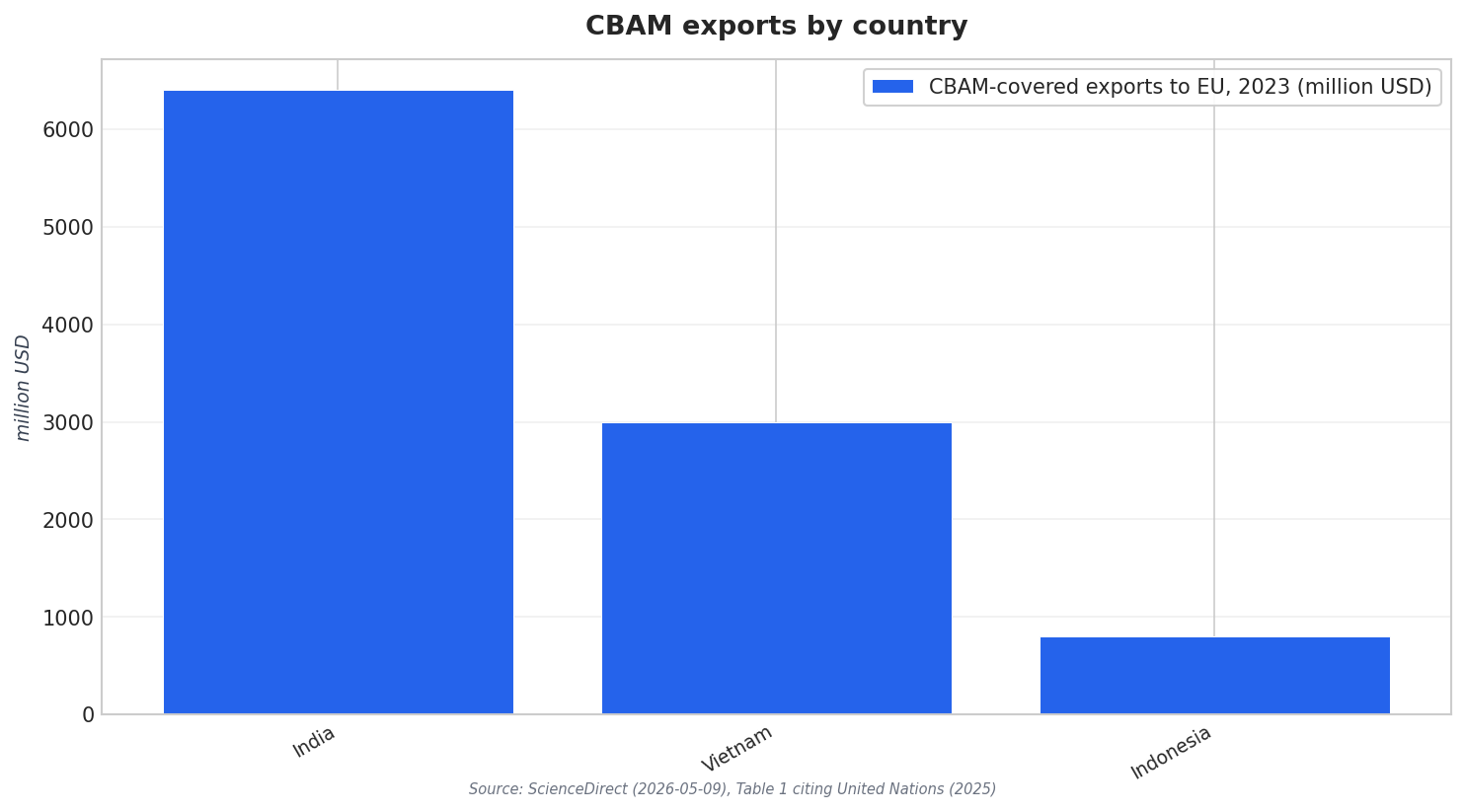
The pressure is visible in EU-facing steel flows and in the penalties attached to missing data. RECCESSARY reported that Vietnam’s iron and steel exports to the EU exceeded EUR 2.2 billion in 2024, compared with about EUR 120 million for Thailand, an exposure ratio of more than 18 to one for that product category. In parallel, the EU’s default value mechanism under Regulation 2025/2621 means facilities without verified, site-level emissions data must use country-level default values with added penalties of 10% in 2026, 20% in 2027, and 30% from 2028. The combined effect is that carbon accounting capability can reprice the same shipment even before any plant upgrades happen.
Steel’s Adaptation Playbook: Verified Data, Not Guesswork
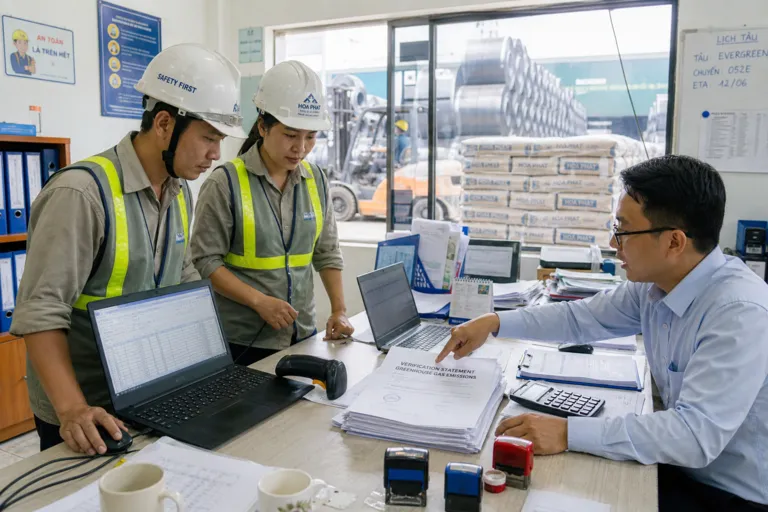
Across sources, the clearest near-term lever is to replace defaults with audited, site-level emissions reporting. TTI describes how “audited tradability” increasingly dictates market access, and it quantifies the advantage: Hoa Phat Group’s BSI-verified actual intensity of 1.91 tCO₂e per tonne creates about €40 million in annual compliance advantage versus default-reliant competitors. RECCESSARY’s webinar recap frames the same dynamic through shipment economics. For hot-rolled coil, Hu’s analysis shows that by 2030, a Vietnamese producer relying on default values would face carbon costs of EUR 336 per tonne, compared with EUR 274 per tonne for a Thai counterpart, a 22% gap driven by data transparency rather than actual emissions performance.
Cement exporters face a different, more indirect countdown that still reshapes demand. TTI notes that for cement, the risk is not only Brussels, but Manila: Vietnam’s largest buyer, where the Philippine government is developing UNIDO-backed carbon procurement thresholds. In that context, Vietnam’s clinker intensity is cited at 913.47 kg CO₂ per tonne, which is 6% above the global mean, and therefore cannot currently clear those thresholds. This matters because CBAM-style requirements can diffuse into buyer procurement rules, meaning exporters may need verified intensity data and a credible reduction pathway even when the importing jurisdiction is not the EU.
Companies are already adjusting strategy as trade friction and reporting complexity rise. Vietnam’s CBAM story also includes safeguard and duty pressures alongside carbon costs. TTI cites EU anti-dumping duties adding 12.1% to the cost floor for most steel exporters (EU 2025/1919), while the VP Carbon overview highlights that CBAM’s transition phase runs from October 1, 2023, to December 31, 2025, during which EU importers report goods and embedded emissions, including direct and indirect emissions from electricity. In Vietnam, exporters are also balancing market exposure by shifting sales mix: IndexBox reports Nam Kim Steel JSC saw domestic revenue rise 21% in 2025 to nearly 8.83 trillion Vietnamese dong, with domestic sales at 59.2% of total revenue, while export sales fell 54.7% to 6.07 trillion dong. Together, these moves show how vietnam CBAM carbon border tax exposure is increasingly managed through verified data systems, contract choices, and market prioritization, not only through long-cycle plant investments.
What is Vietnam’s estimated CBAM liability in 2026 across key export industries?
How large is the CBAM cost exposure for Vietnam’s steel sector specifically?
How do EU default-value penalties change costs for exporters without verified emissions data?
Why are cement exporters adapting even when the risk is not only EU CBAM?
How are companies responding to Vietnam’s CBAM carbon border tax exposure in practical terms?