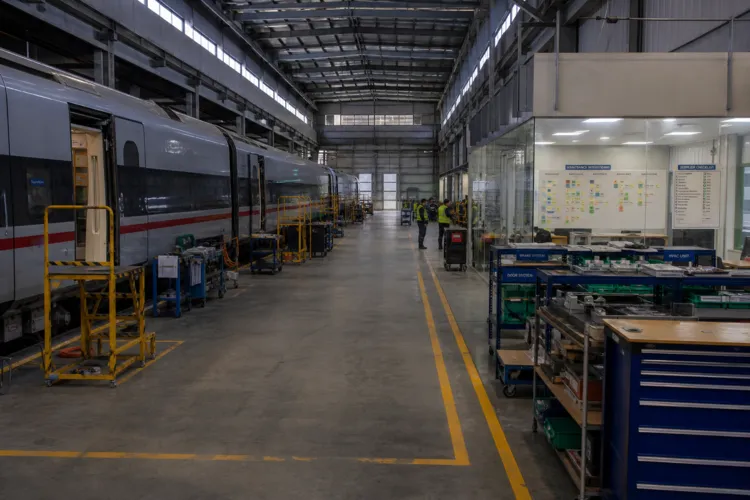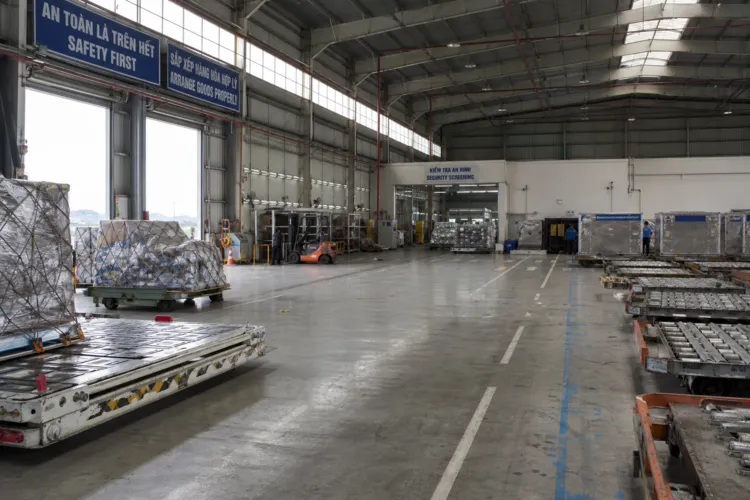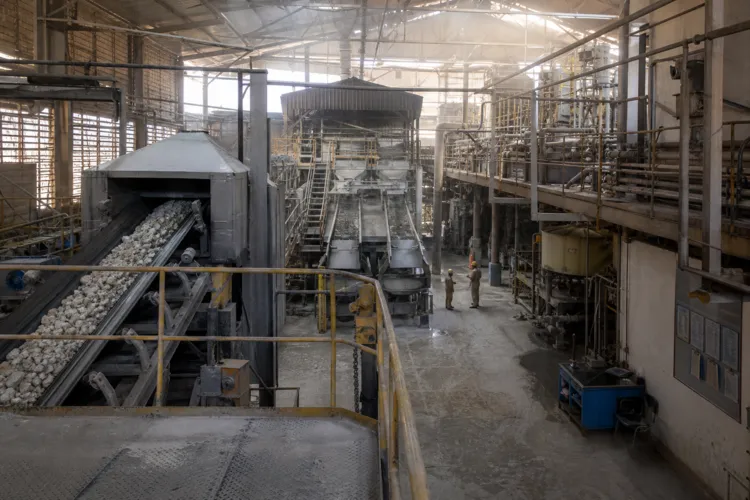

Viettel Group has broken ground on Vietnam’s first semiconductor wafer fabrication plant in Hoa Lac Hi-Tech Park on the outskirts of Hanoi. The facility covers 27 hectares and is being developed under a mandate from the Ministry of National Defence. Viettel has said the site is intended to function as national infrastructure supporting research, design, testing, and semiconductor chip production, with both civilian and defence applications. Reuters also reports the project is part of Vietnam’s plan to create its own semiconductor manufacturing ecosystem, and that the investment size has not been disclosed.
What makes the Hoa Lac project different is that it targets front-end manufacturing, the stage Vietnam has “not yet performed domestically,” according to Viettel’s statement cited by Reuters. Vietnam has gradually built capabilities across most stages of the chip supply chain, primarily chip design and back-end assembly, packaging, and testing. Reuters adds that Vietnam is projected to raise its share of global assembly, testing, and packaging capacity to 8%–9% by 2032, up from 1% in 2022, based on a 2024 report by the U.S. Semiconductor Industry Association and Boston Consulting Group. That back-end momentum is a key backdrop for evaluating whether a first fab can help close the front-end gap.
Timeline, Technology Node, and What “Pilot” Really Means
Viettel aims to pilot production of 32-nanometre chips by the end of 2027, after construction, technology transfer, and initial installation. Reuters says construction and technology transfer are expected to be completed by the end of next year, followed by trial operation, process fine-tuning, and equipment upgrades through to 2030. The Business Times and other reports describe 2028 to 2030 as a period for optimising processes and improving operations in line with industry standards, laying groundwork for research into more advanced chipmaking technologies. In practice, this framing suggests a phased approach: prove the line works at a mature node, then use operational learning to support next-step R&D rather than claiming immediate parity with global leaders.
The larger question for any Vietnam semiconductor fab is whether it can be sustained in a segment known for heavy costs and long payback periods. The Business Times notes that industry executives have warned a fab can cost anywhere from US$10 billion to US$50 billion depending on scale and technology node. One industry voice quoted in that report argues that a fab “built today will almost certainly lose money,” but also likens it to infrastructure that may be necessary if Vietnam wants to move deeper into semiconductors. Viettel has positioned the output as supporting national priority sectors, including aerospace, telecommunications, and automotive manufacturing, while Reuters adds medical equipment among the target markets.
National strategy provides another lens for the Hoa Lac facility’s role. The Business Times reports Vietnam’s semiconductor strategy unveiled in September 2024 targeted at least one domestic small-scale fab by the end of 2030, plus another 10 packaging, assembly, and testing factories and around 100 chip-design companies by 2030, employing about 50,000 chip engineers and specialised workers. Reuters and other coverage also cite plans to train 50,000 chip design engineers by 2030 and grow the semiconductor workforce to over 100,000 by 2040. Meanwhile, B-Company cautions that advanced front-end fabs are “not yet realistic” in the short term, suggesting a more plausible path is to build a track record with niche or mature-node front-end processes—an interpretation that fits the Hoa Lac plan to start at 32 nanometres and then optimise through 2030.
Where is Viettel’s Hoa Lac wafer fab located and how large is it?
When is the Hoa Lac plant expected to begin pilot or trial chip production?
What chip node does Viettel plan to pilot at the Hoa Lac facility?
How does Vietnam’s back-end strength compare with the new front-end push?
What is the outlook for a Vietnam semiconductor fab to close the front-end gap quickly?