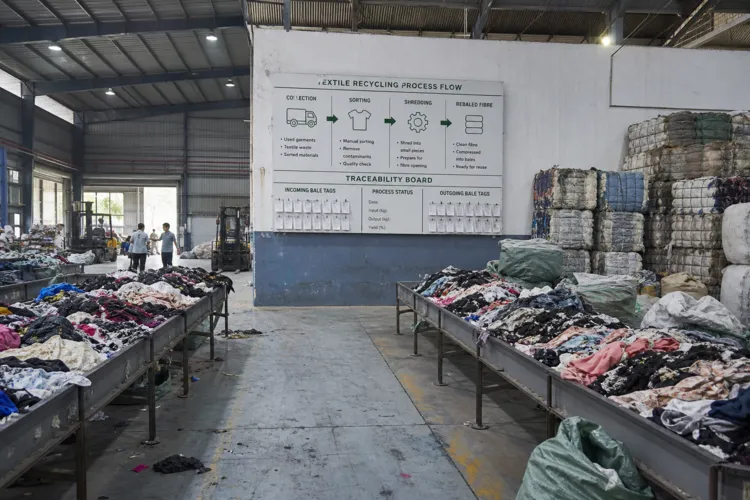

Pressure is rising across the Vietnam freight forwarding market as customers demand speed, visibility, and predictable compliance. Nexdigm links market scale to Vietnam’s export-oriented manufacturing ecosystem and growing cross-border trade flows, with strong demand tied to electronics, textiles, footwear, and furniture shipments. Logistics activity concentrates in Ho Chi Minh City, Hanoi, Hai Phong, and Da Nang, reflecting how industrial zones and ports shape day-to-day forwarding volumes. Ho Chi Minh City’s export role is reinforced by proximity to manufacturing clusters and the Cai Mep–Thi Vai port complex, while Hai Phong supports northern industrial corridors tied to electronics and machinery exports.
Mode mix keeps sea freight at the center of competition. Nexdigm describes sea freight as holding the dominant share in Vietnam because of export-driven activity, cost efficiency for bulk cargo, and coastline port infrastructure, with container volumes for electronics, garments, and furniture moving primarily on maritime routes. That pattern aligns with wider ASEAN context from Mordor Intelligence, where sea freight accounts for 54.60% of shipments across the region. Vietnam’s ocean-forwarding niche also shows meaningful scale: MMR Statistics values the Vietnam ocean freight forwarding market at USD 1,127.19 Mn in 2025, driven by rising containerized trade and expanding regional exports.
Consolidation and Digital Rules Raise the Bar
Consolidation is not just a global storyline; it is becoming a practical competitive factor for Vietnam-facing networks. In ASEAN, Mordor Intelligence notes that DSV completed the acquisition of Schenker from Deutsche Bahn for USD 14.3 billion in April 2025, creating the world’s largest freight forwarder by revenue. That kind of scale matters when shippers want consistent service across lanes and modes. At the same time, MarkWide Research emphasizes that Vietnam’s Logistics Development Strategy mandates digital customs platforms and green fleet conversion timelines that filter participant eligibility, while Vietnam’s Ministry of Transport and the Vietnam Logistics Business Association shape market access through licensing and professional certification standards.
Digitization is moving from “nice to have” to table stakes, especially where customs and small-parcel flows intersect. Mordor Intelligence highlights a Vietnam SuperPort initiative: in December 2024, YCH Group’s Vietnam SuperPort aligned with Vietnam Post to deliver blockchain-enabled digital logistics services targeting SMEs. MarkWide Research adds that warehouse management systems are the fastest-growing technology segment as operators automate inventory tracking, while freight forwarding and transportation services capture dominant value pools as manufacturing exports surge. For forwarders, the operational reality is also tightening on the road side, as axle-load enforcement tightening across the Red River and Mekong Delta corridors forces changes to truck configurations and terminal access protocols.
For shippers, the outcome is a market where scale, compliance, and software capability increasingly determine who wins accounts. Electronics manufacturing stands out as a demand engine in Nexdigm’s segmentation, with forwarders coordinating component imports and finished-goods exports, managing customs documentation, container scheduling, and multimodal networks between factories and ports. Regional competition adds more context: Mordor Intelligence forecasts ASEAN freight forwarding at USD 33.13 billion in 2026, growing at a 4.78% CAGR to USD 41.86 billion by 2031, and it points to Vietnam as the fastest-growing national market with a 5.05% CAGR. In this environment, forwarders that can combine maritime strength with credible digital processes are better positioned as consolidation accelerates.
What is driving pressure in Vietnam’s freight forwarding landscape?
How dominant is sea freight in this market?
How large is Vietnam’s ocean freight forwarding segment?
What are the clearest signs of consolidation affecting Vietnam-facing forwarders?
What is changing in the Vietnam freight forwarding market around digitization?