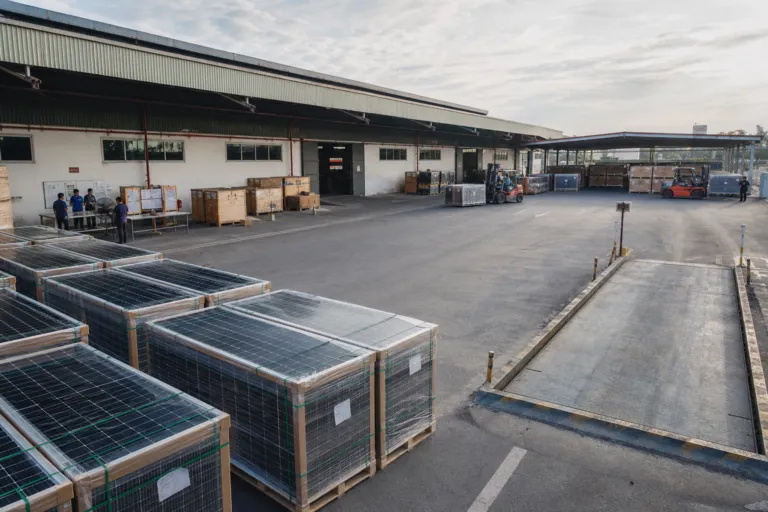
Vietnam’s module makers are navigating a trade environment shaped by U.S. policy tools that include tariffs and duties, alongside tax credits and loans designed to support domestic manufacturers. The U.S. Department of Energy describes the solar supply chain as global, while also noting it is dominated by products from China or companies with close ties to China. That framing matters for exporters shipping into the U.S. market, because the same policy toolkit that encourages local production can also raise the compliance and pricing bar for imported modules. For Vietnam’s solar panel export strategies, this pushes companies to sharpen documentation, clarify sourcing, and strengthen their positioning beyond any single destination.
Understanding where duties and scrutiny can bite requires a clear picture of the PV chain. The U.S. supply chain overview breaks crystalline-silicon manufacturing into steps that start with polysilicon at a minimum purity level of 99.999999 percent, then proceed through wafers, cells, and finished PV modules. It also separates “balance of module” items such as solar glass, encapsulant, backsheets, junction boxes, and metal frames, plus downstream equipment like mounting systems and inverters. For Vietnam-based exporters, these definitions are operational, not academic. They inform how products are described, how value-added steps are communicated, and how procurement choices ripple into trade exposure.
New Markets Start at Home: Vietnam’s Demand Signals
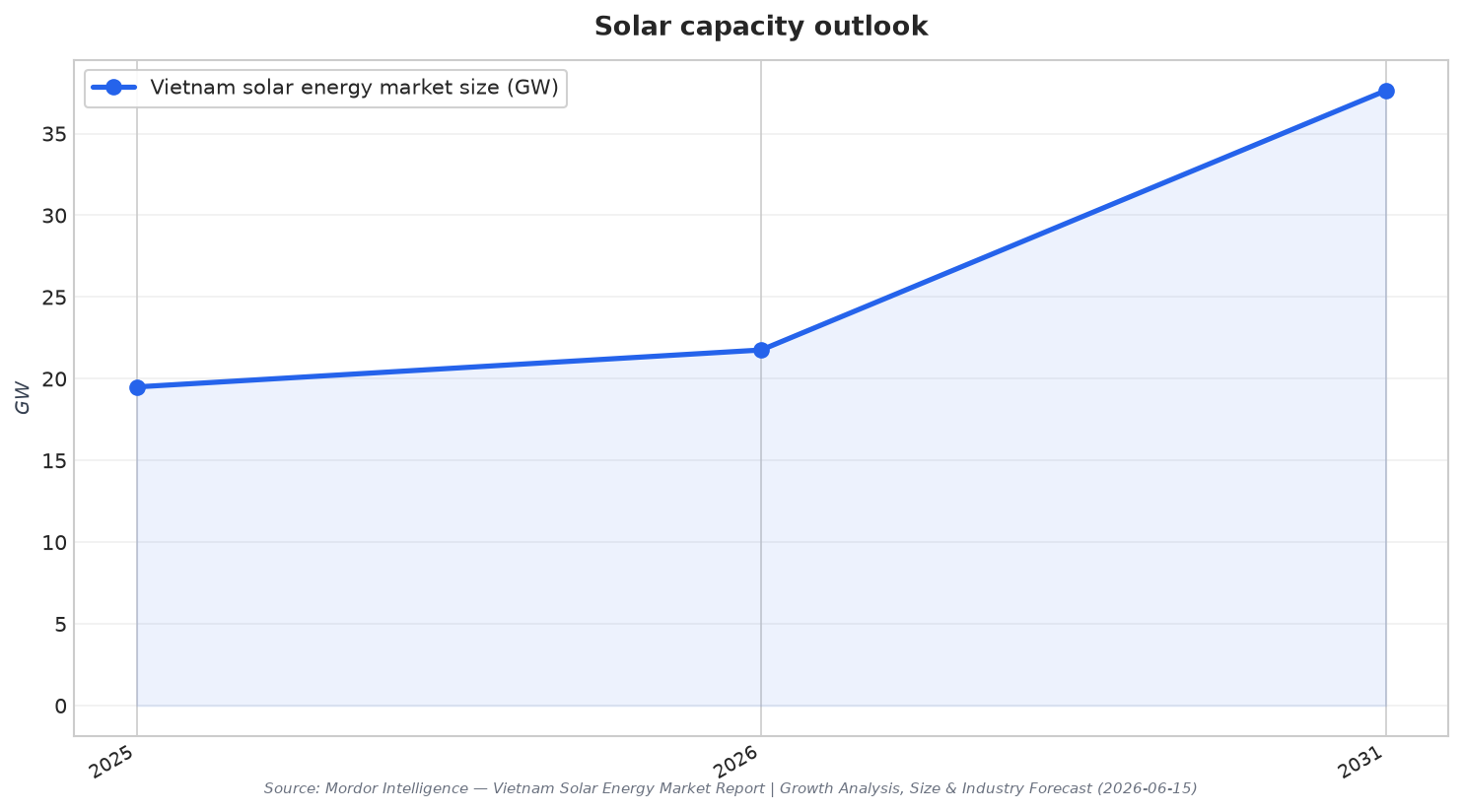
While exporters scan for new overseas markets, domestic demand is also rising and can become a stabilizing outlet when trade conditions tighten. Mordor Intelligence values Vietnam’s solar energy market at 19.5 GW in 2025 and estimates growth from 21.76 GW in 2026 to 37.63 GW by 2031, at a CAGR of 11.58% for 2026–2031. The same source reports that solar PV captured 100.00% of the market share in 2025 and that on-grid systems accounted for 99.88% of installed capacity that year. Utility-scale projects represented 79.65% of the 2025 market size, while commercial and industrial installations are expected to advance at a 14.26% CAGR over 2026–2031 under the direct power-purchase agreement framework.
Vietnam’s solar equipment story also reflects where projects cluster and what that means for factory planning. Mordor Intelligence notes that Ninh Thuan, Binh Thuan, and Tay Ninh provinces accounted for roughly 64.50% of 2025 capacity, while northern provinces are forecast to grow at a 12.98% CAGR through 2031. In parallel, Grand View Research expects Vietnam’s solar energy systems market to reach projected revenue of US$ 12.4 billion by 2030, with a 15.7% CAGR from 2023 to 2030. In that outlook, solar panels were the largest segment with a 47.37% revenue share in 2022. For manufacturers, this mix can justify allocating output between export orders and Vietnam-based deployments, especially when trade friction alters lead times and pricing in the U.S.
Company capabilities and product positioning will influence who adapts fastest. PV Knowhow points to Boviet Solar Technology Co., Ltd., established in 2013, and describes its focus on monocrystalline PERC and TOPCon photovoltaic cells as well as monofacial and bifacial PV modules. MarketsandMarkets adds that Vietnam, with competitive labor costs and strategic geographic positioning, is expected to capture significant market share in domestic installations and regional solar equipment exports. Against this backdrop, vietnam solar panel exports can be reframed as a portfolio problem: maintain access where trade measures are tightening, but also cultivate nearer regional demand and a stronger base in Vietnam’s own expanding solar market.
What U.S. policy tools are shaping Vietnamese solar module access to the U.S. market?
How big is Vietnam’s solar market expected to be by 2031?
Which parts of the PV supply chain matter most when trade scrutiny increases?
What does Vietnam’s installation mix suggest about alternative demand for manufacturers?
Where are vietnam solar panel exports likely to find support beyond one destination market?