Carbon credits are traded permits or certificates that represent 1 ton of CO2 (or an equivalent amount of another greenhouse gas expressed as CO2e), according to Forbes Vietnam. The idea of trading emissions has roots in the United Nations Kyoto Protocol, adopted in 1997, where countries with excess emission rights could sell them to those that exceeded targets. In Vietnam, this logic is increasingly applied to forests because credits can also reflect CO2 absorbed or removed by projects such as reforestation and forest protection. That framing matters for Vietnam forest carbon credits because it explains why “selling the canopy” is not just a conservation slogan. It is a market mechanism that can channel funding toward measurable climate outcomes.
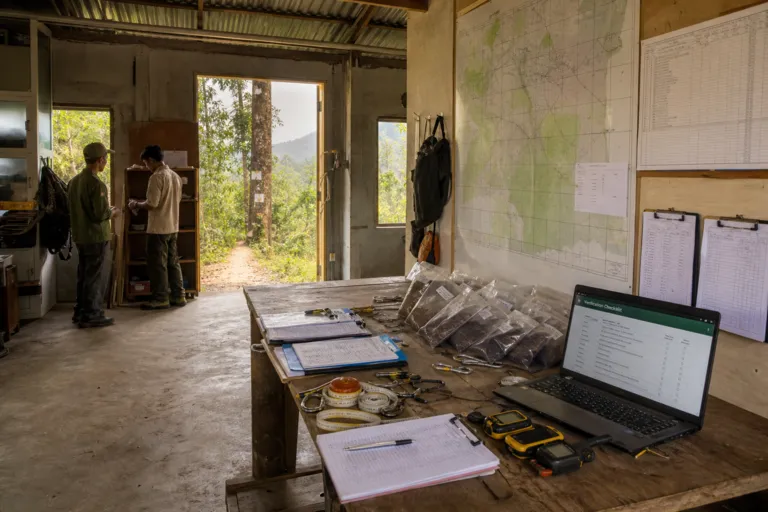
Vietnam has already demonstrated large-scale forest carbon monetization through jurisdictional programs. One example is a World Bank payment of USD 56.5 million after Vietnam cut 10.3 million metric tons of CO2 through forest protection and better land management. The payment covered verified emissions reductions from 2018 to 2019 in the country’s North Central Region under an Emission Reductions Payment Agreement of the Forest Carbon Partnership Facility. The program spans six provinces: Thanh Hoa, Nghe An, Ha Tinh, Quang Binh, Quang Tri, and Thua Thien Hue. More than 70% of that payment is expected to go directly to forest owners, local communities, households, and organizations that helped protect and restore forests, with the remainder supporting management and monitoring.
Where Voluntary Demand Meets Vietnam’s Policy Direction
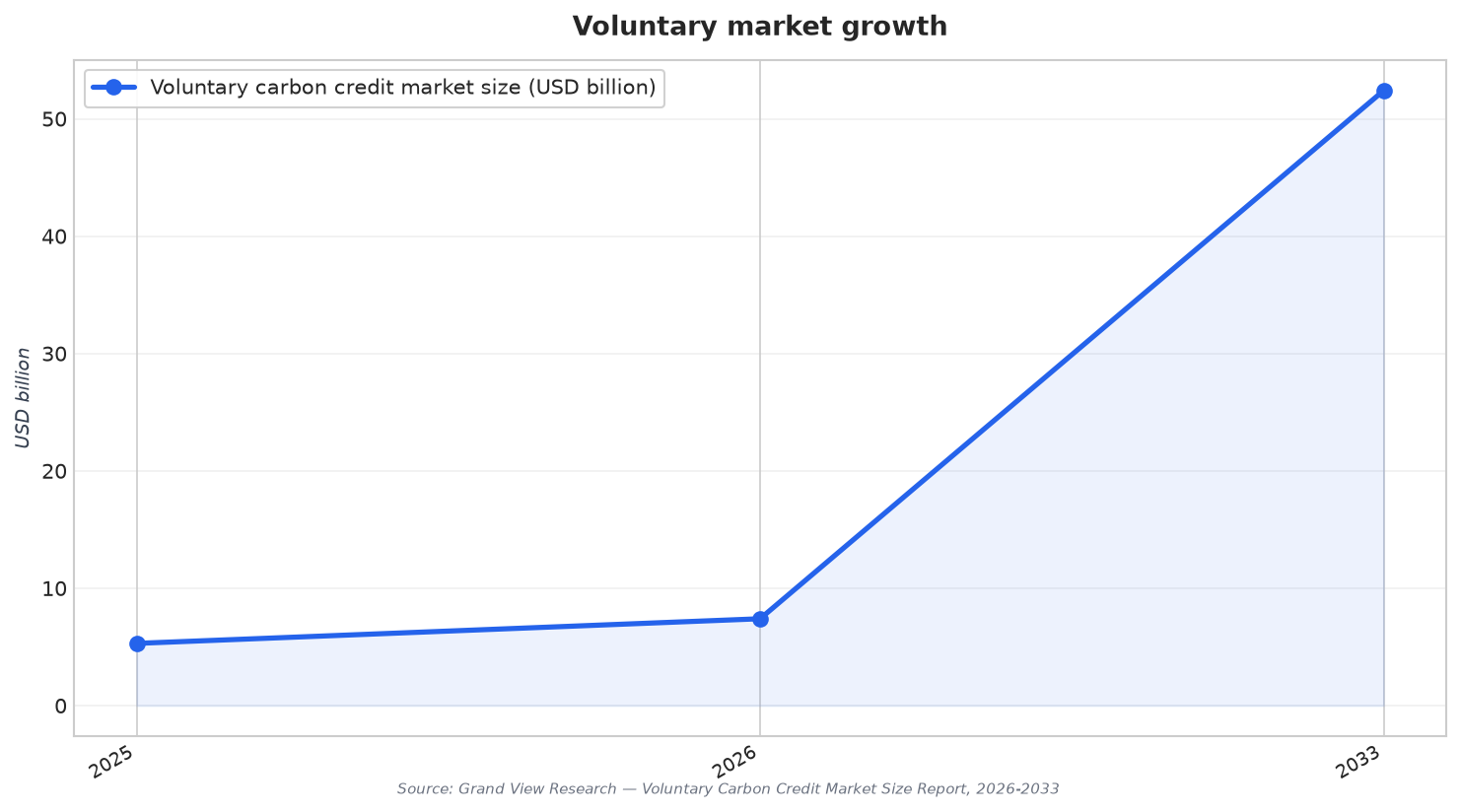
Vietnam’s forest credits have often moved through voluntary channels. A Vietnam Journal of Agricultural Sciences review notes that credits from Vietnam’s forests have been traded primarily through voluntary markets, with transactions and funding largely derived from donors, and it highlights an estimated potential of 40–70 million credits from forest carbon sequestration (it also cites 57 million credits from agriculture). On the demand side, Grand View Research values the global voluntary carbon credit market at USD 5.3B in 2025 and projects growth from USD 7.4B in 2026 to USD 52.4B by 2033, at a CAGR of 32.2%. It also points to growing preference for high-integrity carbon removal projects, including afforestation and reforestation, which aligns with nature-based credit supply.
Domestic policy signals shape how forest credits could be used and exported. B-Company summarizes that, under Vietnam’s 2020 Law on Environmental Protection, a carbon credit represents the right to emit one ton of CO2 or equivalent and can be traded under a cap-and-trade system where the government sets limits and allocates allowances. In parallel, Vietnam is running a pilot Emissions Trading Scheme that the ESG Institute says covers about 50% of national CO2 emissions, targeting sectors such as power, steel, and cement. Forestry sits alongside this as an offsetting option: the ESG Institute describes Vietnam positioning itself as a supplier of forest carbon credits that could be sold internationally or used domestically, noting around 15 million hectares of forests and the need for Letters of Authorization for forest projects selling credits abroad as ITMOs for proper accounting.
For businesses and project developers, the opportunity is to match credible forest protection with credible market access. Vietnam’s World Bank transaction was described as one of Southeast Asia’s largest jurisdictional forest carbon deals and as a step toward a stronger national carbon market. Vietnam has also stated a net-zero emissions target for 2050, and it updated its Nationally Determined Contribution with a 2030 emissions-cut goal of 15.8% using domestic resources, potentially rising to 43.5% with international support. The voluntary market’s growth projections and the government’s expanding trading framework suggest momentum, but the practical work stays the same: build measurable forest outcomes, maintain monitoring, and structure sales in a way that meets both domestic rules and international buyer expectations.
What does a carbon credit represent in Vietnam’s framework?
What verified forest carbon result has Vietnam already sold?
How are Vietnam forest carbon credits linked to voluntary markets?
How big is the global voluntary carbon credit market, according to the sources?
Which provinces were covered by Vietnam’s World Bank forest program?